
OKEFENOKEE Heritage Center
Native American Exhibit
Jim Sawgrass, a Muscogee Creek (Mvskoke) descendant,
is a living historian of the southeastern tribes of
Georgia, Florida, and Alabama.

Native American People of South Georgia
South Georgia had a well-established Native American population prior to the colonization of the New World by European countries. The first Europeans to arrive in Georgia to stay were Spanish priests who built missions along the coast.
Visitors to the OHC Native American exhibit will view the Weeden Island mural, which highlights the Weeden Island society that occurred about 1,300 years ago during the Woodland Period, and the more historically recent Seminole Indian display. The display includes artifacts, clothing items, and an upland hut built of bamboo and palmetto fronds, a style of shelter often used by those living around the Okefenokee Swamp and across South Georgia.
The Seminoles inhabited the Okefenokee area from about 1700 to 1840. They deeply resented the European intrusion and led several campaigns against them, including attacks on hunters, farmers, military supply trains, and finally, the massacre of almost all the Maximillan Wildes family just south of Waycross. The last Seminoles were driven from the Okefenokee by United States military troops and the Georgia Militia in 1842.
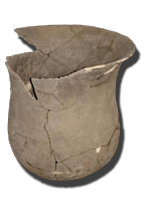 Our Native American exhibit outlines the succession of cultures that have inhabited the Okefenokee region. Through dioramas and artifacts that include tools, pottery, and weapons, visitors can understand more about the way ways of life of Native Americans in Southeast Georgia. Artifacts on display were found on a nearby farm, including the pot shown here, a stamped piece from the Irene culture, circa 1200 A.D.